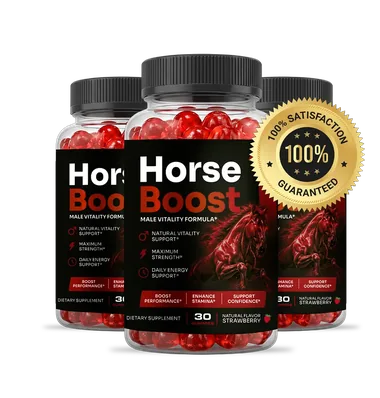
Horse Boost Official Website › Blog › 82 mg Across Nine Names
What Eighty-Two Milligrams Across Nine Names Actually Buys
Every botanical in Horse Boost shares one figure: 82 mg, with caffeine taking 5 mg of it. That single number governs what the product can honestly be said to do, and working through it takes about five minutes and is worth more than any review.
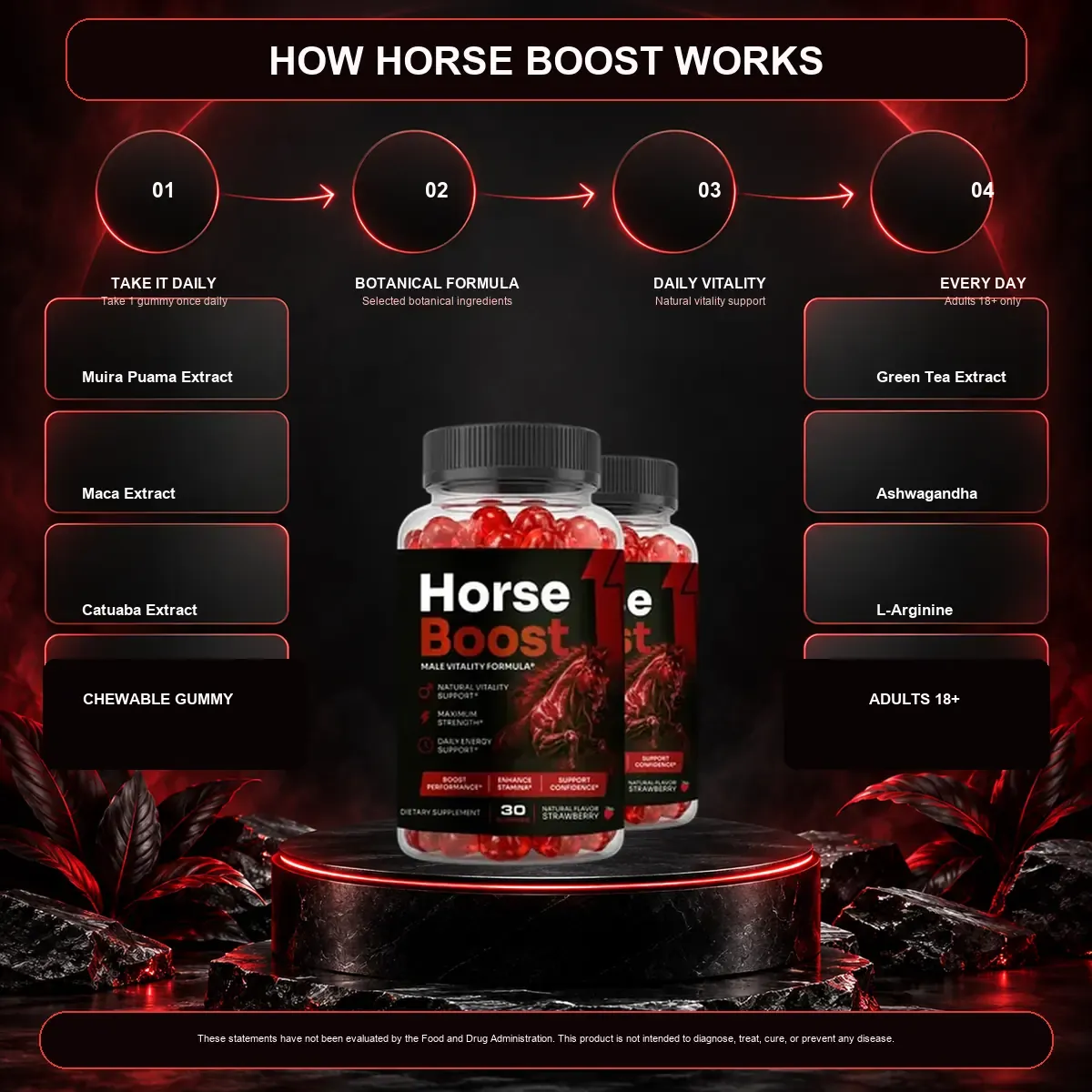
- The panel declares one proprietary blend of 82 mg with nine names under it.
- Caffeine at 5 mg is the only individually printed amount, leaving 77 mg for eight.
- An even split would be 9.6 mg each. The label does not say the split is even.
- The smallest published human dose behind any name here is 300 mg a day.
- The 567 mg dry-powder footnote describes concentration, not a second amount.
One number, nine names
Federal labelling rule permits a manufacturer to group non-nutrient ingredients under a single heading, declare the weight of the group and list the names inside it without splitting the total. 21 CFR 101.36 sets that out, and a 2023 paper in the Journal of Nutrition sets out the consequence in one sentence: the amount of a dietary ingredient in a proprietary blend is not available from the label, so it cannot be used to calculate intake or to determine doses.
That is not a scandal and it is not unusual. It is the ordinary structure of this aisle, and the 2023 analysis of what is actually inside marketed products in this category found the same pattern across it: many names, few declared amounts, and doses under the ones trialled.
What it means in practice is that a buyer has exactly two numbers to work with. The blend total, which is 82 mg. And caffeine, which is 5 mg because a stimulant has to be declared separately. Everything else is arithmetic done on those two.
What a blend total does establish
More than nothing, and it is worth being precise about how much more.
| What the blend total tells you | What it does not |
|---|---|
| The maximum any one ingredient can be: 77 mg once caffeine takes its 5 | How much of any one ingredient is actually present |
| The honest average: 9.6 mg across eight names | Whether the split is even, or ninety per cent one name |
| The order of predominance, from the list order | The ratios between adjacent names |
| That the product is a combination rather than a single-ingredient dose | Whether the combination does anything the parts would not |
Four things gained and four lost. The left column is more than nothing and it is less than a dose.
The ceiling is the useful half. No single name on this panel can be present at more than 77 mg, because 77 mg is all the weight there is once caffeine is accounted for. That is a hard limit and it does not depend on trusting anybody.
The average is the honest half. Eight names sharing 77 mg is 9.6 mg each if the split is even, and nothing says it is. The first name could hold most of it; the last could be a dusting. Descending order of predominance is the only guidance the list gives, and it is a ranking rather than a ratio.
- Ceiling: 77 mg, for any one of the eight botanical names.
- Average: 9.6 mg each, if evenly divided.
- Known: caffeine, 5 mg, printed.
- Order: muira puama first, horny goat weed last.
- Unknown: every actual share, permanently, from the label alone.
Read the Horse Boost panel alongside this
The nine names in panel order, the blend total, the nutrition block and the Other Ingredients line, all reproduced from the bottle.
Two bottles $158 · six bottles $294 · 60 days from purchase to change your mind
Order Horse Boost On The Official WebsiteOne gummy a day · 30 a bottle · lot HOR-26/HO-4117
The distance, name by name
The comparison worth making is not between ingredients on this label. It is between 82 mg and the amounts the research behind those names actually used. Every figure below was read out of the paper's own abstract.
| Name on the panel | Published human dose | As a multiple of the whole 82 mg blend |
|---|---|---|
| Maca Extract | 1,500 mg a day, the smaller arm of the twelve-week trial | About 18 times |
| L-Arginine | 1,500 mg a day, the bottom of the meta-analysis range | About 18 times |
| Tribulus Terrestris | 400 mg a day, the bottom of the review range | About 5 times |
| Ashwagandha | 300 mg a day, the bottom of the stress dose-response | About 4 times |
| Caffeine | 200 mg, where the attention effect separates clearly | About 2.5 times, and 40 times the printed 5 mg |
| Muira puama, catuaba, horny goat weed | No human dose established | Not comparable |
Every left-hand figure is the SMALLEST dose in that paper's range, and every multiple is against the whole blend rather than against one name's share of it. Both choices make the comparison as favourable as it honestly can be.
Three of those rows carry real trials. Maca moved self-reported sexual desire in a twelve-week randomised trial at 1,500 or 3,000 mg a day, with no change in serum testosterone. Arginine improved mild to moderate erectile dysfunction across ten trials in 540 men at 1,500 to 5,000 mg. Ashwagandha reduced anxiety and stress in twelve trials in 1,002 people, with a favourable dose-response at 300 to 600 mg a day and a stated certainty of low.
Every one of those numbers is larger than the entire blend, and the entire blend is shared nine ways. That is the arithmetic, and no amount of presentation changes it.
It does not mean the gummy contains nothing, and it does not mean the ingredients are inert. It means no trial result on this page can be claimed for this product, and nothing on this website claims one. The label's own claims are six support phrases, which is a deliberately modest ceiling and is the correct one for a blend this size.
The footnote that looks like a rescue
The blend row carries a symbol pointing at a footnote: equivalent to approximately 567 mg of dry powders. Read quickly, that looks like the number was seven times larger all along. It is not.
An extract is made by taking plant material, pulling out a fraction and discarding the rest. The footnote says the 82 mg in the gummy started as roughly 567 mg of dried plant, an average concentration of about seven to one. There is 82 mg in the gummy. There is not 567 mg of anything.
It is still worth having, because it is a disclosure most labels in this format skip, and because it is the number to use if you want the most generous possible comparison. Take 567 mg, assign the whole of it to one name and ignore the other eight, and it is still below the smaller maca arm and a third of the arginine range.
- 82 mg is what is in the gummy.
- 567 mg is what it was made from, before extraction.
- Neither figure is per-ingredient; both cover all nine names.
- An extract ratio cannot be confirmed by any method of analysis, so it is a claim about process rather than a measurement.
- The generous reading and the plain reading reach the same conclusion, which is the point of doing both.
Why blends are legal, and why that is not the point
The usual objection to a proprietary blend is that it hides something. The usual defence is that it protects a formula from being copied. Both are beside the point for a buyer.
The rule exists and it is old: the Dietary Supplement Health and Education Act of 1994 permits non-nutrient ingredients to be grouped, and the labelling regulation implements it. A manufacturer using a blend is doing something ordinary and lawful, and treating it as evidence of bad faith would condemn most of this aisle along with it.
What matters to a purchase is narrower and more useful. A blend removes the only figure you could have compared with a trial, which means a buyer cannot tell a well-dosed formula from a poorly dosed one from the label alone. The seller knows the split and the buyer does not, and that asymmetry is a fact about the transaction rather than an accusation about anybody's motives.
- A blend is lawful, common and not in itself a red flag.
- It withholds exactly one thing: the split.
- The split is the only thing that would let you compare with a trial.
- So a blend makes two very different products look identical on a shelf.
- The only defence is the arithmetic at the top of this page, done for each one.
Which is why the blend total is the first number to find on any label in this category, and why 82 mg across nine names is stated at the top of every relevant page on this website rather than left for a reader to work out.
What to do with all of this
Decide what you are buying. A nine-name blend at 82 mg is a combination product in a pleasant format with a generous return window. It is not a delivery vehicle for a research dose of maca, arginine or ashwagandha, and a buyer who wants one of those should buy that one thing at that amount instead.
Both of those are reasonable purchases and they are different purchases. The mistake is making the first one while believing you made the second, and the only thing standing between a buyer and that mistake is the sum at the top of this page.
- Find the blend total on any label in this aisle.
- Count the names under it.
- Divide. Write the answer down.
- Compare it with one researched dose for one name on that list.
- Then look at the price.
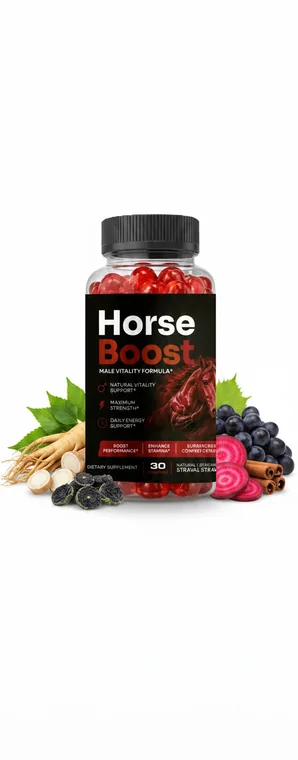
This desk sells the product whose arithmetic is set out above, which is a reason to read this page sceptically and also the reason it exists. A website that printed only the flattering half of an 82 mg blend would not deserve to be believed about anything else on the label.
References
- Saldanha LG, Dwyer JT, Hardy CJ, et al. Perspectives on the Use of Proprietary Blends in Dietary Supplements. J Nutr. 2023;153(5):1305-1308. PMID 37004873. https://pubmed.ncbi.nlm.nih.gov/37004873/
- 21 CFR 101.36, Nutrition labeling of dietary supplements. Electronic Code of Federal Regulations, Office of the Federal Register. https://www.ecfr.gov/current/title-21/chapter-I/subchapter-B/part-101/subpart-F/section-101.36
- Gonzales GF, Córdova A, Vega K, et al. Effect of Lepidium meyenii (MACA) on sexual desire and its absent relationship with serum testosterone levels in adult healthy men. Andrologia. 2002;34(6):367-72. PMID 12472620. https://pubmed.ncbi.nlm.nih.gov/12472620/
- Rhim HC, Kim MS, Park YJ, et al. The Potential Role of Arginine Supplements on Erectile Dysfunction: A Systemic Review and Meta-Analysis. J Sex Med. 2019;16(2):223-234. PMID 30770070. https://pubmed.ncbi.nlm.nih.gov/30770070/
- Akhgarjand C, Asoudeh F, Bagheri A, et al. Does Ashwagandha supplementation have a beneficial effect on the management of anxiety and stress? A systematic review and meta-analysis of randomized controlled trials. Phytother Res. 2022;36(11):4115-4124. PMID 36017529. https://pubmed.ncbi.nlm.nih.gov/36017529/
- Petre GC, Francini-Pesenti F, Vitagliano A, et al. Dietary Supplements for Erectile Dysfunction: Analysis of Marketed Products, Systematic Review, Meta-Analysis and Rational Use. Nutrients. 2023;15(17). PMID 37686709. https://pubmed.ncbi.nlm.nih.gov/37686709/
Order Horse Boost with the sum done
82 mg, nine names, 5 mg of it caffeine, and 60 days from the day you pay to decide whether the format is worth it to you.
Two bottles $158 · six bottles $294 · 60 days from purchase to change your mind
Order Horse Boost On The Official WebsiteOne gummy a day · 30 a bottle · lot HOR-26/HO-4117