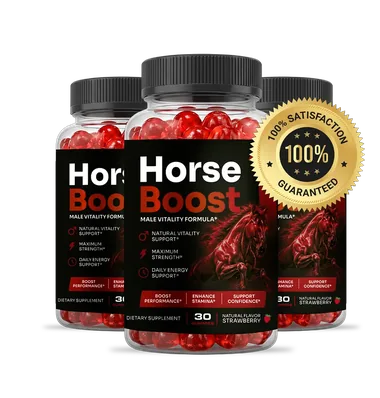
Horse Boost Official Website › Blog › Five Milligrams Of Caffeine
Five Milligrams Of Caffeine, And Why A Label Bothers To Print It
Caffeine is the only ingredient in Horse Boost with an amount beside its name. Five milligrams is about a twentieth of a mug of coffee, which raises an obvious question: why declare it at all? The answer explains more about supplement labelling than the figure itself does.
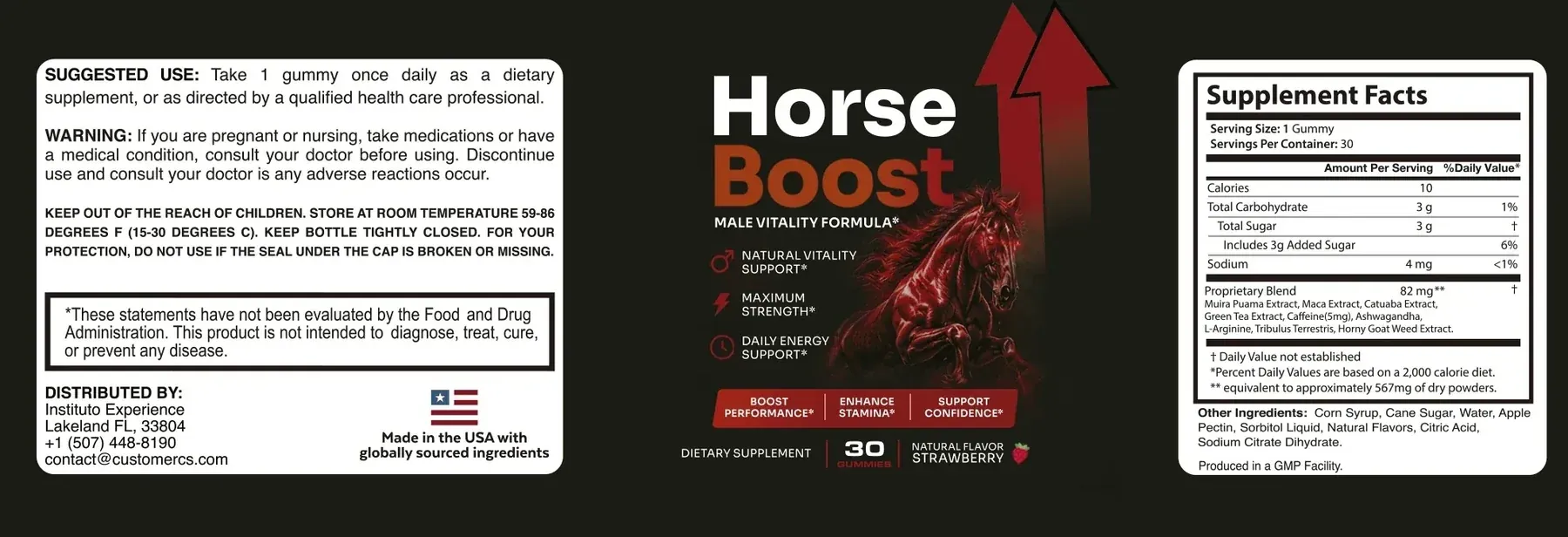
- Caffeine is the only individually declared amount inside the 82 mg blend.
- Five milligrams is roughly a twentieth of a mug of brewed coffee.
- It is almost certainly there because green tea extract brings it.
- Declaring it is a point in the label’s favour, not a warning.
- It is also the only number on this panel a buyer can compare with anything.
Why one number is broken out of a blend
A proprietary blend is allowed to hide its split. 21 CFR 101.36 requires the total weight of the blend and the names inside it in descending order of predominance, and nothing more. So a manufacturer who breaks one figure out is either required to, or choosing to.
In this case it is almost certainly the former in spirit and the latter in form. Caffeine is a pharmacologically active stimulant that consumers actively track, and declaring it separately is the responsible convention in this category whether or not a specific rule compels it on a given label. A product that put an unstated quantity of caffeine inside an unsplit blend would be a product to avoid.
The result is that this panel has exactly two numbers a reader can use: 82 mg for the blend, and 5 mg for caffeine. One of those is a ceiling for nine ingredients and the other is an actual amount. It is worth noticing which is which.
How much five milligrams is
Very little, and the comparison is the fastest way to see it.
| Source | Caffeine | Against one Horse Boost gummy |
|---|---|---|
| One Horse Boost gummy | 5 mg | 1x |
| A square of dark chocolate | roughly 12 mg | about 2x |
| A cup of decaffeinated coffee | roughly 15 mg | about 3x |
| A cup of black tea | roughly 47 mg | about 9x |
| A mug of brewed coffee | roughly 95 mg | about 19x |
| The dose where attention effects separate | 200 mg | 40x |
Beverage figures are the ordinary published ranges and vary widely with preparation. The last row is the threshold identified in the meta-analysis cited below and is the only figure here taken from a single source.
Forty times less than the dose where a meta-analysis of thirty-one trials in 1,455 people found reaction time and accuracy separating clearly from placebo. Nineteen times less than a mug of coffee. About a third of a cup of decaf.
On sleep, the systematic review of caffeine and sleep concerns doses and timings that are not in the same conversation as 5 mg. MedlinePlus is the plain-language reference if you want the general picture.
So the honest statement about this figure is that nothing in the published literature predicts an effect from it. That is not a criticism of the label. It is a reason the label is worth trusting on other things: a manufacturer who declares a figure this small is not declaring it to impress anyone.
The rest of the Horse Boost panel
Nine names, one 82 mg blend, the full nutrition block and the Other Ingredients line, reproduced exactly as the bottle prints them.
Two bottles $158 · six bottles $294 · 60 days from purchase to change your mind
Order Horse Boost On The Official WebsiteOne gummy a day · 30 a bottle · lot HOR-26/HO-4117
Where it probably comes from
Green tea extract is the fourth name on the blend and green tea naturally contains caffeine. An extract concentrates it along with the catechins, so any product carrying green tea extract carries some caffeine unless it has been specifically decaffeinated.
That is the most likely explanation for a 5 mg figure on a panel with no other stimulant on it, and it matters for one practical reason: the 5 mg is the total the label declares for the gummy. It is not an addition to whatever the tea extract carries, it is that amount.
The related point is about catechins rather than caffeine. The systematic review of green tea safety sets a safe intake of 338 mg of EGCG a day for a solid bolus dose and identifies the liver as the target organ above it. An 82 mg blend shared nine ways is nowhere near that figure. Anyone taking a separate green tea extract alongside it should nevertheless add the two together rather than counting them apart.
- Green tea extract is on the panel, fourth of nine.
- Green tea contains caffeine; an extract concentrates it.
- 5 mg is the declared total, not an addition to it.
- The catechin question is separate and is about the liver, not about alertness.
- Two green tea products at once is the one combination worth adding up.
Whether the time of day matters at 5 mg
The label prints no time of day. That is unusual enough to be worth explaining, because a product carrying any stimulant at all will often specify a morning dose.
Caffeine's half-life in a healthy adult runs to about five hours, which is why an afternoon coffee reaches bedtime with a meaningful fraction of it still circulating. Run the same arithmetic on 5 mg and the numbers stop being interesting: after five hours there is 2.5 mg, after ten there is 1.25 mg, and a single square of dark chocolate would have contributed more.
So the honest advice about timing is that it is a habit question rather than a pharmacological one. Take it whenever you will reliably remember it, which for most people is attached to something already fixed in the morning. The only reason to prefer the morning specifically is that it removes the question entirely for anyone who believes themselves unusually sensitive, and removing a question costs nothing.
- No time of day is printed on this label.
- Five milligrams is too small for the usual timing arithmetic to bite.
- Pick the moment you will not forget, not the pharmacologically optimal one.
- If you think you are caffeine-sensitive, take it in the morning and stop thinking about it.
- Thirty days in a row matters far more than which thirty moments they were.
Who should actually care
| Who should care about 5 mg | Why | What to do |
|---|---|---|
| Anyone tracking intake to a limit | It is 5 mg that would otherwise be uncounted | Add it. It will not change the answer, and the habit is the point |
| Anyone unusually sensitive | Sensitivity is not linear and self-report is all anyone has | Take it in the morning and the question disappears |
| Anyone already taking a green tea extract | Catechins and caffeine arrive together | Count both products, not one |
| Anyone avoiding caffeine entirely | 5 mg is not zero, and a label saying 5 mg is a label saying not zero | This is not the product |
| Everybody else | It is a twentieth of a coffee | Nothing |
Four groups for whom the figure is worth reading, and one for whom it is not.
The fourth row is the one worth pausing on. A reader avoiding caffeine completely, for whatever reason, is entitled to treat 5 mg as disqualifying, and the label gives them what they need to make that call in about two seconds. That is exactly what a declared figure is for.
The fifth row is the honest one for most people. A twentieth of a cup of coffee, taken once a day, is not a thing to plan around.
The wider habit this teaches
On any supplement label in any aisle, find the numbers that are actually numbers. Vitamins and minerals must be declared individually. Stimulants are conventionally declared. Everything else in a blend shares one figure.
Those declared amounts are the only part of a label that can be compared with anything, which makes them worth disproportionate attention even when they are small. A panel with one real figure on it tells you more than a panel with a longer list of names and none.
- Find every amount printed beside a single name.
- Find the blend total and the count of names sharing it.
- Ask whether the declared amounts are large enough to matter.
- Ask whether the undeclared ones could be, given the ceiling.
- Buy on the answers, not on the length of the list.
A label that prints 5 mg of caffeine is telling you something true about a small amount. It is the same label printing 82 mg for nine botanicals, which is telling you something true about a total. Both are honest and only one of them is a dose.
There is a version of this habit that goes wrong, and it is worth naming. A buyer who learns to look for declared amounts can end up preferring the label with the most numbers on it, which is not the same as the label with the best numbers on it. A product listing fourteen vitamins at token percentages has more figures than this one and tells you less, because a long column of two-per-cent entries is a decoration made of arithmetic.
The useful question is not how many amounts are printed. It is whether any printed amount is large enough to do something, and whether the undeclared remainder could be. On this panel the answer to the first is no, at 5 mg of caffeine, and the answer to the second is capped at 77 mg across eight names. Both of those are worth knowing and neither depends on counting how many figures the label carries.
The same reading applies to the parts of this label that carry no figure at all. The Other Ingredients line names corn syrup and cane sugar first, which is a statement about weight without a number attached, and the nutrition block above the blend turns that statement into three grams. A label read in order tells a consistent story; a label read for its largest numbers tells whichever story the packaging wanted.
References
- Kløve K, Petersen A. A systematic review and meta-analysis of the acute effect of caffeine on attention. Psychopharmacology (Berl). 2025;242(9):1909-1930. PMID 40335666. https://pubmed.ncbi.nlm.nih.gov/40335666/
- Clark I, Landolt HP. Coffee, caffeine, and sleep: A systematic review of epidemiological studies and randomized controlled trials. Sleep Med Rev. 2017;31:70-78. PMID 26899133. https://pubmed.ncbi.nlm.nih.gov/26899133/
- Caffeine. MedlinePlus, U.S. National Library of Medicine. https://medlineplus.gov/caffeine.html
- Hu J, Webster D, Cao J, et al. The safety of green tea and green tea extract consumption in adults - Results of a systematic review. Regul Toxicol Pharmacol. 2018;95:412-433. PMID 29580974. https://pubmed.ncbi.nlm.nih.gov/29580974/
- 21 CFR 101.36, Nutrition labeling of dietary supplements. Electronic Code of Federal Regulations, Office of the Federal Register. https://www.ecfr.gov/current/title-21/chapter-I/subchapter-B/part-101/subpart-F/section-101.36
Order Horse Boost with the numbers read
Two real figures on the panel, both printed here, and 60 days from purchase to decide what they are worth to you.
Two bottles $158 · six bottles $294 · 60 days from purchase to change your mind
Order Horse Boost On The Official WebsiteOne gummy a day · 30 a bottle · lot HOR-26/HO-4117