Horse Boost Official Website › Blog › Sixty Days From Purchase
Sixty Days From Purchase, Not From Delivery: How To Run The Window
A money-back window is only as long as the date it starts from, and almost every buyer assumes it starts when the parcel arrives. On this product it starts when the payment clears, which is the shorter count and the one to plan against.
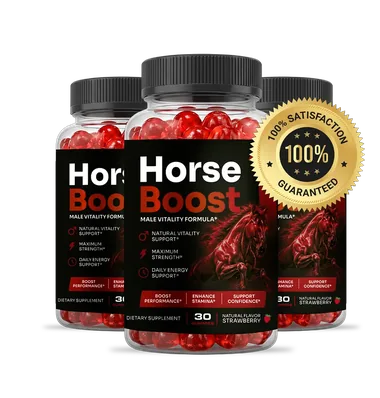
- The window is sixty days, counted from the date of purchase.
- Purchase happens before dispatch, so that count closes earlier than a delivery count.
- By the time the first gummy is chewed, roughly six of the sixty are already spent.
- Nobody finishes a two-bottle pack inside the window; the decision comes first.
- Setting a day-55 reminder on the day you order removes the only real failure mode.
Four ways to start a sixty-day clock
Sixty days is a number. It becomes a date only when somebody says what day zero is, and sellers in this category do not all say the same thing.
| Counted from | Day 0 | When it closes | Who it favours |
|---|---|---|---|
| Purchase | The day the payment clears | Sooner | The seller, marginally, and the buyer who knows about it |
| Dispatch | The day the parcel leaves | A day or two later | Nobody in particular. It is rarely used |
| Delivery | The day it lands | Several days later than purchase | The buyer, and it is the count buyers assume |
| First use | Whenever you start | Unbounded in practice | Nobody. No seller offers it |
Four ways to start a sixty-day clock, and they are not the same sixty days. This product counts from purchase, which is the first row.
This product's seller words it from the date of purchase. That is the first row, and it is the earliest of the four starting points, so it produces the earliest closing date. There is no ambiguity in the wording and no second interpretation to hope for.
The practical consequence is small and it is not nothing. A buyer who assumed delivery was day zero would believe the deadline fell several days later than it does, and several days is enough to matter if the decision is being made at the last minute.
Which direction the arithmetic runs
It is worth being explicit about this because it is easy to get backwards, and it has been got backwards in writing more than once.
A purchase happens first. Dispatch happens after it, and delivery after that. So a window measured from the purchase date is measured from the earliest of the three events, and it therefore closes earlier than the same number of days measured from either of the others. Counting from purchase is the conservative reading, transit time sits inside the window rather than beside it, and any deadline computed from a shipping date will be later than the real one.
The rule that follows is one line: never compute a refund deadline from a shipping date. Take the purchase date off the order email and add sixty days to that.
- Open the order email.
- Find the date the payment was taken, not the date of any later message.
- Add sixty days. That is the deadline.
- Subtract five. That is the reminder.
- Put the reminder in a calendar before you do anything else.

The Horse Boost guarantee in full
How the sixty days are counted, who pays return postage, what to enclose with the parcel, and the two waits that follow it.
Two bottles $158 · six bottles $294 · 60 days from purchase to change your mind
Order Horse Boost On The Official WebsiteOne gummy a day · 30 a bottle · lot HOR-26/HO-4117
A two-bottle window, worked through
| Day | Where a two-bottle buyer is | What is left |
|---|---|---|
| 0 | Payment clears. Order email arrives. | 60 days |
| 6 | Parcel has arrived. First gummy that evening. | 54 days |
| 20 | Earliest day anyone in the published set reported anything. | 40 days |
| 30 | First bottle finishes. Second opened. | 30 days |
| 47 | The one three-star buyer in the set rang the desk on this day. | 13 days |
| 55 | The reminder worth setting on the day you order. | 5 days |
| 60 | Window closes. Roughly five gummies still in the bottle. | 0 |
Nobody finishes a two-bottle pack inside the window, so the decision is always made with a few gummies left. That is by design rather than by accident.
Two things fall out of that table. The first is that six days of the sixty are gone before the first gummy, which is the whole argument for using the purchase date rather than the delivery date.
The second is that the smallest pack sold, two bottles, is sixty gummies, and sixty gummies taken daily from day six run to day sixty-six. Nobody finishes a two-bottle pack inside the window. The decision is always made with a few gummies left, which is a design choice rather than an oversight: it means the buyer decides while still taking the product rather than after stopping.
- Day 0 is the payment, not the parcel.
- Roughly six days are spent before the first gummy.
- Day 20 is the earliest anyone in the published set reported anything.
- Day 55 is the reminder. Day 60 is the deadline.
- Five gummies or so remain in the bottle when the window closes.
Deciding what you are testing, before day one
A sixty-day window is only useful if there is a question to answer at the end of it, and vitality is not a question. It has no units, no test and no threshold, so a buyer who has not chosen something to watch will reach day fifty-five with nothing but an impression, and an impression formed over eight weeks is mostly a memory of how the eight weeks went.
The fix takes two minutes on the day the order goes through. Pick one thing you could notice and write it down beside the purchase date.
- The afternoon stretch. Count the days in a normal fortnight where three o'clock is the end of useful work. Count again at day forty.
- Starting a session. Not the quality of the training, the negotiation before it. That is the part people actually report on.
- Flat days per fortnight. A count rather than a feeling, which is the whole point of choosing it in advance.
- Nothing measurable. A legitimate answer, and if it is yours then this product cannot give you what you want and the $158 is better spent elsewhere.
Whichever you pick, write down the baseline before the first gummy. Two lines in a notes application is enough, and it converts a sixty-day window from a period of waiting into an actual trial.
It also makes the refund decision easy rather than agonising. At day fifty-five you either have a different number than you started with or you do not, and either way the call to the desk takes four minutes.
What a claim actually involves
Three steps, and the first one is the one people skip.
Ring the desk first
The order desk on +1 (302) 200-3480 opens the claim against your order number. A parcel posted back without a call is a parcel arriving at a warehouse with nothing to match it to, and it is the most common way a refund goes wrong.
Post it tracked
Return postage is the buyer's unless the delivery arrived damaged, defective or wrong. Use a tracked service and keep the receipt: an untracked parcel that does not arrive is an argument nobody can win, and the few dollars are cheap insurance on a refund worth up to $294.
Wait out both clocks
Three to five business days after the return is credited for the refund to be issued, then five to ten days for the card to show it. Two separate waits, and the second one belongs to the bank rather than to the seller.
A returns address is exactly the sort of detail that changes without anybody updating a web page. The desk will confirm the current one in the same call that opens the claim, which costs nothing and removes the worst possible outcome.
Why a window matters more in this aisle than most
Because nobody can tell you in advance whether the product will do anything, and because the category has a provenance problem.
On the first: a product sold on six support phrases has no measurable endpoint, so there is no test anybody can run before buying. The only real test is sixty days of taking it, which is precisely what the window is long enough for.
On the second: of 776 supplements the FDA warned about between 2007 and 2016, 353 were sold for sexual enhancement, usually for undeclared drug analogues, and the worldwide review describes the same pattern outside the United States. The route into those cases is almost always an anonymous seller. A named channel with an order number, a lot number and a stated refund window does not prove a bottle is clean, but it is the difference between a purchase you can recover from and one you cannot.
That is also why a window bought elsewhere is not this window. A marketplace listing is governed by that seller's policy, and the order desk here cannot see an order it did not take. NCCIH's guidance and the analysis of what is inside marketed products in this category both point the same way: the channel is the part of the purchase a buyer has real control over.

References
- Tucker J, Fischer T, Upjohn L, et al. Unapproved Pharmaceutical Ingredients Included in Dietary Supplements Associated With US Food and Drug Administration Warnings. JAMA Netw Open. 2018;1(6):e183337. PMID 30646238. https://pubmed.ncbi.nlm.nih.gov/30646238/
- Yéléhé-Okouma M, Pape E, Humbertjean L, et al. Drug adulteration of sexual enhancement supplements: a worldwide insidious public health threat. Fundam Clin Pharmacol. 2021;35(5):792-807. PMID 33484004. https://pubmed.ncbi.nlm.nih.gov/33484004/
- Using Dietary Supplements Wisely. National Center for Complementary and Integrative Health, National Institutes of Health. https://www.nccih.nih.gov/health/using-dietary-supplements-wisely
- Petre GC, Francini-Pesenti F, Vitagliano A, et al. Dietary Supplements for Erectile Dysfunction: Analysis of Marketed Products, Systematic Review, Meta-Analysis and Rational Use. Nutrients. 2023;15(17). PMID 37686709. https://pubmed.ncbi.nlm.nih.gov/37686709/
Order Horse Boost and set the reminder
60 days from the day you pay, opened bottles accepted, and one telephone call to start a claim if the answer turns out to be no.
Two bottles $158 · six bottles $294 · 60 days from purchase to change your mind
Order Horse Boost On The Official WebsiteOne gummy a day · 30 a bottle · lot HOR-26/HO-4117